

Lifespan and long-term care costs of African Pygmy Hedgehogs

Lifespan and long-term care costs of African Pygmy Hedgehogs

The Lifespan Reality: A Sprint, Not a Marathon

In the wild, a fennec fox or a wild hedgehog might only survive 1 to 3 years due to predation. However, in a well-managed captive environment, the average lifespan is 4 to 6 years, with some rare “super-seniors” reaching age 8.

Because of their high metabolic rate, hedgehogs age rapidly. By the time a hedgehog reaches 3 years old, they are biologically considered “seniors.” This is the critical threshold where the cost of ownership typically spikes, as age-related illnesses become almost a statistical certainty rather than a possibility.

Initial Setup vs. Annual Maintenance

The first year of hedgehog ownership is always the most expensive, but many owners underestimate the recurring “invisible” costs.

Upfront Costs (Initial Year)

  • The Enclosure: A minimum of 4–6 square feet of flat floor space. Modern 2026 standards recommend large clear-bottomed vivariums or modular acrylic pens ($150–$250).
Lifespan and long-term care costs of African Pygmy Hedgehogs Read More
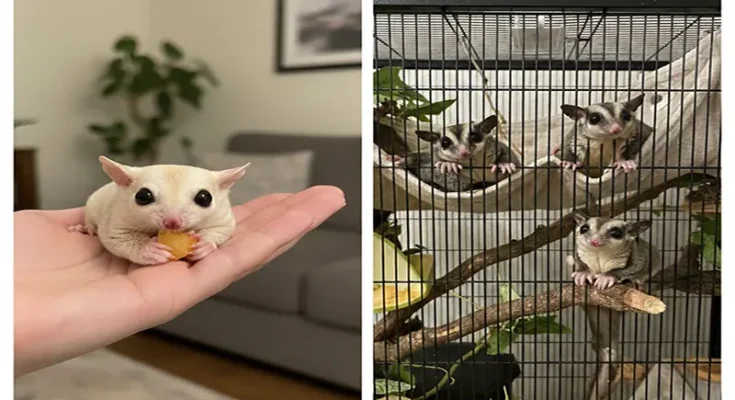
Temperament of hand-raised sugar gliders vs colony-raised

Temperament of hand-raised sugar gliders vs colony-raised

The Foundation: Sugar Glider Social Structure

In the wild, sugar gliders are intensely social, living in communal groups of 6 to 10 individuals. Their lives revolve around a sophisticated language of scents, vocalizations, and grooming rituals. Central to their development is the concept of Imprinting.

Imprinting occurs during the “Pouch Out” (PO) phase and the subsequent weeks of weaning. During this window, a joey learns what it is: is it a glider that communicates with other gliders, or is it a creature that looks to humans for every emotional need? A well-adjusted temperament requires a glider to understand its own species’ social cues while simultaneously viewing humans as safe, non-threatening partners.

Hand-Raised Gliders (HPB – Human-Raised Pouch Babies)

A hand-raised glider is typically removed from the parents early, often due to parental rejection or a breeder’s attempt to create a “super-bonded” pet. These joeys are fed via syringe and …

Temperament of hand-raised sugar gliders vs colony-raised Read More
Legal Permits for Owning a Fennec Fox in California

Legal Permits for Owning a Fennec Fox in California

The Legal Landscape: CCR Title 14, Section 671

California’s approach to exotic animals is governed by the California Code of Regulations (CCR), Title 14, Section 671. This section classifies the fennec fox as a “Restricted Species.” Unlike states that allow these foxes with a simple hobbyist permit, California’s Department of Fish and Wildlife (CDFW) operates under a prohibitive framework.

The CDFW restricts species based on four critical pillars:

  1. Public Safety: Protecting citizens from unpredictable wild behavior.
  2. Environmental Protection: Preventing non-native species from escaping and outcompeting California’s native flora and fauna.
  3. Disease Control: Mitigating the risk of zoonotic diseases.
  4. Animal Welfare: Ensuring that specialized animals are not kept in substandard domestic conditions.

Because fennec foxes are non-native canids that could potentially establish feral populations in California’s desert regions, they are strictly regulated to prevent environmental “detriment.”

Who CAN Get a Permit? (The Exceptions)

While you cannot get a permit to …

Legal Permits for Owning a Fennec Fox in California Read More
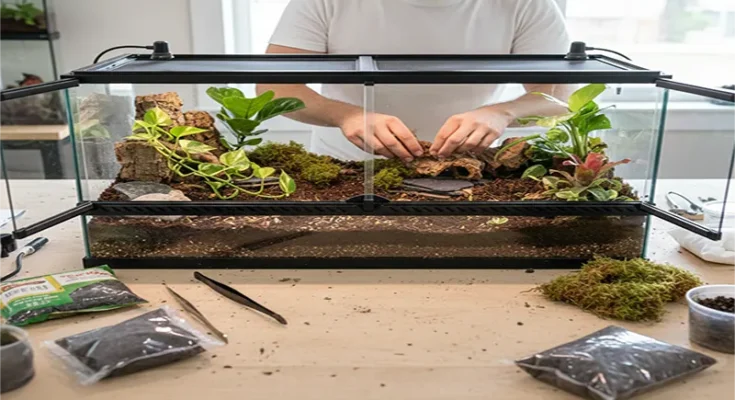
How to build a bioactive terrarium for crested geckos

How to build a bioactive terrarium for crested geckos

Why Go Bioactive?

The primary advantage of a bioactive system is the natural nitrogen cycle. In a traditional setup, you are the janitor; in a bioactive setup, the “Clean-Up Crew” (CUC) handles the heavy lifting. This leads to:

  • Stable Humidity: Real plants and organic soil hold moisture far better than glass and plastic.
  • Natural Enrichment: Geckos can hunt microfauna, climb real wood, and hide among living leaves.
  • Aesthetic Appeal: It transforms a pet enclosure into a stunning piece of living home decor.

Essential Components Breakdown

To build a functional ecosystem, you must layer the environment correctly. Think of it as building a house: if the foundation is wrong, the rest will eventually collapse.

1. The Enclosure

Crested geckos are arboreal. You need a vertical enclosure. The minimum recommended size for an adult is 18x18x24 inches, though larger is always better. Front-opening glass terrariums are ideal as they …

How to build a bioactive terrarium for crested geckos Read More
Dietary Requirements for Captive-Bred Axolotls

Dietary Requirements for Captive-Bred Axolotls

The Carnivorous Vacuum: Understanding Morphology

To feed an axolotl correctly, you must first understand how they eat. Axolotls are obligate carnivores, meaning their bodies are biologically designed to process animal protein and very little else. Unlike many other amphibians, axolotls have vestigial teeth—tiny, cone-like structures that are not meant for chewing or tearing meat. Instead, these teeth are used merely to grip prey.

Their primary method of ingestion is known as buccal force feeding, or “suction feeding.” When an axolotl senses movement (primarily through lateral line systems and smell), it snaps its mouth open suddenly. This creates a powerful vacuum that pulls the prey, along with a significant amount of water, into the oral cavity. Because they swallow their food whole, the size and texture of what you provide are critical to preventing choking or internal blockages.

The Gold Standard: Earthworms and Nightcrawlers

If there is a “superfood” …

Dietary Requirements for Captive-Bred Axolotls Read More