
Lifespan and long-term care costs of African Pygmy Hedgehogs

Lifespan and long-term care costs of African Pygmy Hedgehogs

The Lifespan Reality: A Sprint, Not a Marathon

In the wild, a fennec fox or a wild hedgehog might only survive 1 to 3 years due to predation. However, in a well-managed captive environment, the average lifespan is 4 to 6 years, with some rare “super-seniors” reaching age 8.

Because of their high metabolic rate, hedgehogs age rapidly. By the time a hedgehog reaches 3 years old, they are biologically considered “seniors.” This is the critical threshold where the cost of ownership typically spikes, as age-related illnesses become almost a statistical certainty rather than a possibility.

Initial Setup vs. Annual Maintenance

The first year of hedgehog ownership is always the most expensive, but many owners underestimate the recurring “invisible” costs.

Upfront Costs (Initial Year)

  • The Enclosure: A minimum of 4–6 square feet of flat floor space. Modern 2026 standards recommend large clear-bottomed vivariums or modular acrylic pens ($150–$250).
Lifespan and long-term care costs of African Pygmy Hedgehogs Read More
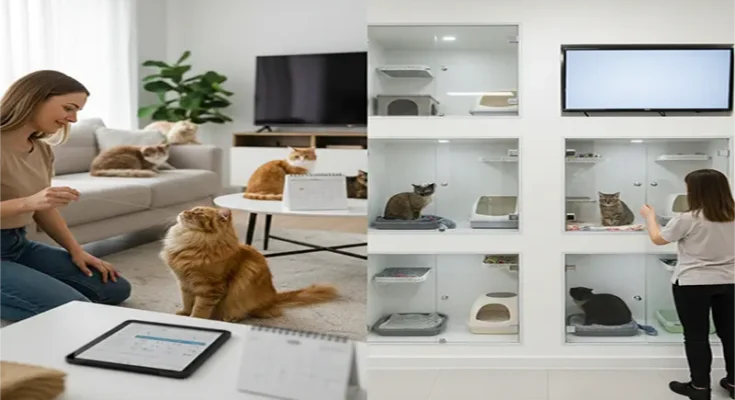
Cost of in-home cat sitting vs. professional cat boarding in 2026

Cost of in-home cat sitting vs. professional cat boarding in 2026

The Pet Care Economy in 2026

The “humanization of pets” trend that began a decade ago has reached its peak in 2026. Cat owners are now more willing than ever to invest in high-quality care, but inflation has pushed baseline prices upward. While app-based “gig” platforms still exist, they have largely shifted toward specialized, vetted services to compete with boutique local businesses. These local firms offer higher levels of insurance, staff training in feline behavior, and sophisticated tech integration, making professional cat care a premium service.

In-Home Cat Sitting: The “Luxury of Familiarity”

For the majority of cats—territorial creatures by nature—the primary benefit of in-home sitting is the lack of environmental stress. In 2026, this is considered the “gold standard” for behaviorally sensitive or elderly cats.

Pricing Structure

  • Standard 30-Minute Visit: Expect to pay between $32 and $48 per visit. This typically covers feeding, litter scooping, and brief social
Cost of in-home cat sitting vs. professional cat boarding in 2026 Read More
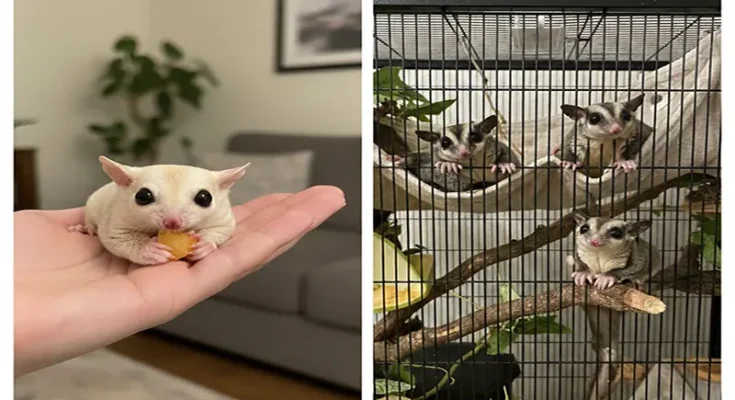
Temperament of hand-raised sugar gliders vs colony-raised

Temperament of hand-raised sugar gliders vs colony-raised

The Foundation: Sugar Glider Social Structure

In the wild, sugar gliders are intensely social, living in communal groups of 6 to 10 individuals. Their lives revolve around a sophisticated language of scents, vocalizations, and grooming rituals. Central to their development is the concept of Imprinting.

Imprinting occurs during the “Pouch Out” (PO) phase and the subsequent weeks of weaning. During this window, a joey learns what it is: is it a glider that communicates with other gliders, or is it a creature that looks to humans for every emotional need? A well-adjusted temperament requires a glider to understand its own species’ social cues while simultaneously viewing humans as safe, non-threatening partners.

Hand-Raised Gliders (HPB – Human-Raised Pouch Babies)

A hand-raised glider is typically removed from the parents early, often due to parental rejection or a breeder’s attempt to create a “super-bonded” pet. These joeys are fed via syringe and …

Temperament of hand-raised sugar gliders vs colony-raised Read More