
Why Go Bioactive?
The primary advantage of a bioactive system is the natural nitrogen cycle. In a traditional setup, you are the janitor; in a bioactive setup, the “Clean-Up Crew” (CUC) handles the heavy lifting. This leads to:
- Stable Humidity: Real plants and organic soil hold moisture far better than glass and plastic.
- Natural Enrichment: Geckos can hunt microfauna, climb real wood, and hide among living leaves.
- Aesthetic Appeal: It transforms a pet enclosure into a stunning piece of living home decor.
Essential Components Breakdown
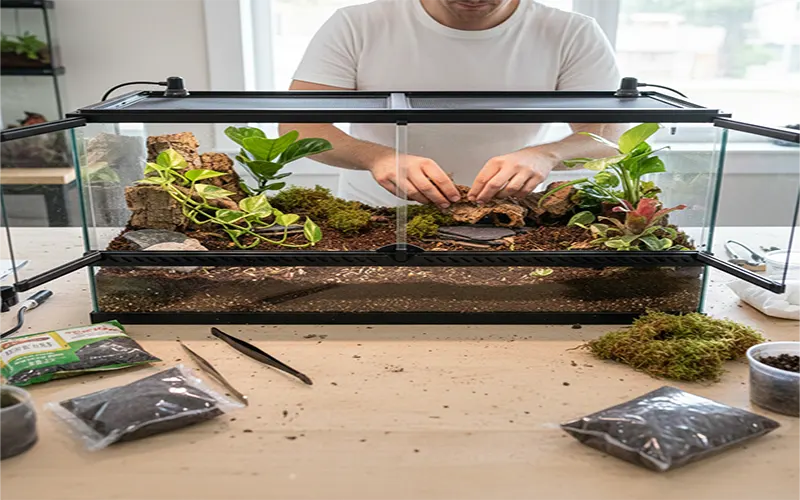
To build a functional ecosystem, you must layer the environment correctly. Think of it as building a house: if the foundation is wrong, the rest will eventually collapse.
1. The Enclosure
Crested geckos are arboreal. You need a vertical enclosure. The minimum recommended size for an adult is 18x18x24 inches, though larger is always better. Front-opening glass terrariums are ideal as they allow for easy misting and maintenance without disturbing the gecko from above.
2. The Drainage Layer
Because you will be misting heavily to maintain 60-80% humidity, water will inevitably pool at the bottom. Without a drainage layer, the soil becomes waterlogged, leading to “sour” soil and root rot.
- Materials: Use 2-3 inches of hydroton (expanded clay balls) or lightweight lava rock.
3. The Substrate Barrier
This is a fine mesh or window screen placed directly on top of the drainage layer. It prevents the fine substrate from falling into the rocks and clogging the drainage area.
4. The Bioactive Substrate
Do not use plain potting soil, which often contains fertilizers or perlite that can be harmful if ingested. A crested gecko mix must be airy yet moisture-retentive.
- The Mix: A blend of coconut fiber, sphagnum moss, orchid bark, and horticultural charcoal. This provides the right pH and structure for plant roots and microfauna.
5. Leaf Litter
This is the “skin” of the ecosystem. A thick layer of dried oak or magnolia leaves provides a home for your clean-up crew and prevents the gecko from getting mouthfuls of dirt when hunting.
6. The Clean-Up Crew (CUC)
These are the invertebrates that eat mold, decaying plant matter, and gecko droppings.
- Springtails: Tiny white hexapods that are masters of mold control.
- Isopods: “Pill bugs” or “roly-polies.” Dwarf Whites are excellent because they stay underground, while Powder Blues/Oranges are active and visible.
Planting for Cresties
Crested geckos are heavy-bodied. They will literally “lounge” your plants to death if they aren’t sturdy.
- Pothos (Epipremnum aureum): The king of terrarium plants. It grows fast, handles low light, and has strong vines.
- Snake Plants (Sansevieria): Extremely sturdy. These provide excellent “vertical” sleeping spots for geckos.
- Bromeliads: These “tank” plants hold water in their center, creating natural drinking stations.
- Philodendron: Similar to pothos but with different leaf shapes for variety.
Safety Warning: Always wash your plants thoroughly! Remove all original soil, wash the roots to remove fertilizers, and spray the leaves with a diluted dish soap/water mix to ensure no hitchhiking pests or pesticides enter the terrarium.
Hardscaping & Enrichment
Your gecko needs to utilize the top 75% of the tank.
- Cork Bark: Naturally mold-resistant and easy for geckos to grip.
- Ghost Wood or Manzanita: Great for creating “highways” across the enclosure.
- Magnetic Ledges: Essential for feeding. In the wild, crested geckos eat in the trees, so place your food and water ledges high up on the glass.
Lighting and Heating
A bioactive tank has different lighting needs than a sterile one because you are now a gardener as well as a keeper.
- LED Plant Grow Light: You need a full-spectrum LED (6500K) to keep the plants alive. Without this, your plants will “stretch” and eventually die.
- UVB Lighting: While crested geckos can survive without it (if given Vitamin D3), they thrive with it. A low-output UVB like the Arcadia ShadeDweller (7% or 2.4% depending on height) mimics the dappled sunlight of the forest floor.
- Heating: Crested geckos prefer temperatures between 72-78°F. If your home stays within this range, you may not need a heater. If it drops below 68°F, use a low-wattage ceramic heat emitter connected to a thermostat.
Cycling the Terrarium
One of the most common mistakes is adding the gecko on Day 1. A bioactive tank needs a cycling period of 2 to 4 weeks.
- Establish the CUC: Give the isopods and springtails time to find their “territories” and start breeding.
- Root the Plants: Allow the plants to anchor themselves into the substrate so the gecko doesn’t knock them over.
- Balance the Fungi: It is normal to see a “bloom” of white mold in the first week. Don’t panic! Your CUC will see this as a buffet and clear it out within a few days.
Ongoing Maintenance
While “self-cleaning,” a bioactive tank still requires human intervention:
- Misting: Mist heavily at night and lightly in the morning. The tank should dry out slightly during the day to prevent bacterial growth.
- CUC Supplements: Occasionally drop a piece of fish food or a specialized isopod diet under the leaf litter to ensure your CUC stays populated.
- Glass Cleaning: Use distilled water and a microfiber cloth to wipe “gecko nose prints” off the glass. Avoid chemical cleaners.
- Pruning: In a healthy tank, Pothos will take over. Trim plants back to ensure there is still plenty of “air space” for the gecko to jump.
Building a bioactive terrarium is an investment in your crested gecko’s long-term health. It reduces the stress of deep-cleaning days and provides a stimulating, ever-changing environment. Once that first Bromeliad blooms and you see your gecko nestled in a real Pothos leaf, you’ll never want to go back to a plastic tub again.