
Safe indoor plants for cats that like to chew

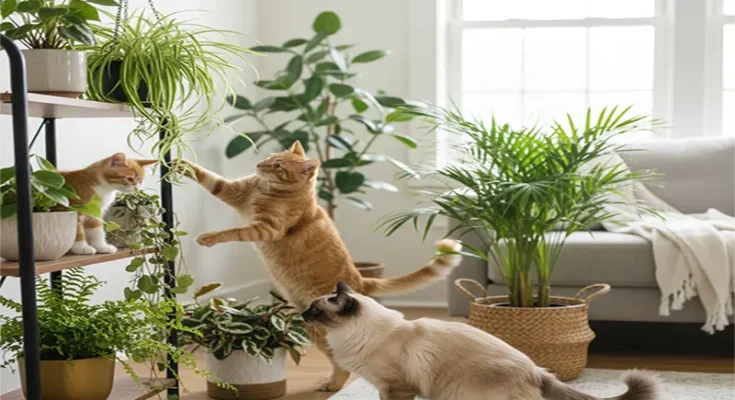
Safe indoor plants for cats that like to chew

The Biology of the Nibble: Why Cats Chew Plants

Why do cats, obligate carnivores, gravitate towards plants? It’s often a mix of instinct and environment:

  • Dietary Fiber: Even though meat is their primary food, a small amount of roughage can aid digestion and help pass hairballs.
  • Boredom or Stress: Chewing provides mental stimulation and can be a self-soothing behavior.
  • Texture Seeking: Some cats simply enjoy the sensation of tearing and munching on leaves.
  • Instinctual Cleansing: In the wild, eating grass can induce vomiting, helping cats purge indigestible parts of their prey or hairballs.

It is crucial to understand the distinction between “Toxic” and “Irritant.” A truly toxic plant (like lilies) can cause systemic organ failure or even death. An irritant (like a Pothos) typically causes localized irritation in the mouth, leading to drooling, pawing at the mouth, or mild stomach upset. While bothersome, it is rarely life-threatening. Our focus here …

Safe indoor plants for cats that like to chew Read More
Legal Permits for Owning a Fennec Fox in California

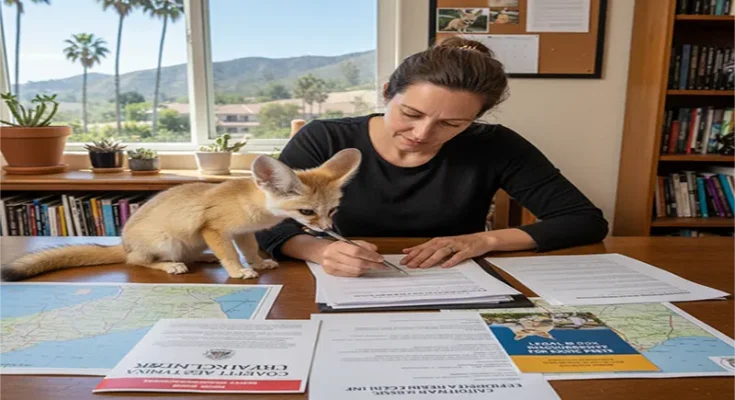
Legal Permits for Owning a Fennec Fox in California

The Legal Landscape: CCR Title 14, Section 671

California’s approach to exotic animals is governed by the California Code of Regulations (CCR), Title 14, Section 671. This section classifies the fennec fox as a “Restricted Species.” Unlike states that allow these foxes with a simple hobbyist permit, California’s Department of Fish and Wildlife (CDFW) operates under a prohibitive framework.

The CDFW restricts species based on four critical pillars:

  1. Public Safety: Protecting citizens from unpredictable wild behavior.
  2. Environmental Protection: Preventing non-native species from escaping and outcompeting California’s native flora and fauna.
  3. Disease Control: Mitigating the risk of zoonotic diseases.
  4. Animal Welfare: Ensuring that specialized animals are not kept in substandard domestic conditions.

Because fennec foxes are non-native canids that could potentially establish feral populations in California’s desert regions, they are strictly regulated to prevent environmental “detriment.”

Who CAN Get a Permit? (The Exceptions)

While you cannot get a permit to …

Legal Permits for Owning a Fennec Fox in California Read More
Self-cleaning litter box comparison for multi-cat households

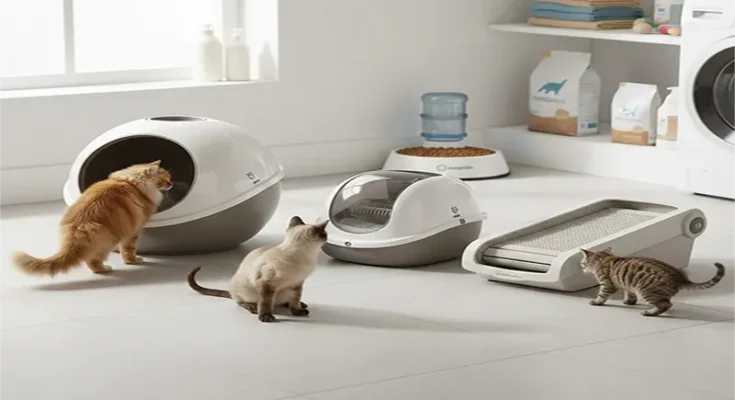
Self-cleaning litter box comparison for multi-cat households

The Multi-Cat Challenge: Why Most Boxes Fail

When you have multiple cats, the “scooping fatigue” is real. Statistically, three cats will use a litter box roughly 9 to 15 times a day. For an automated system, this means the motor must cycle dozens of times without jamming, and the waste drawer must be large enough that you aren’t emptying it every 24 hours.

Standard automated boxes often fail in multi-cat environments due to:

  • Small Waste Drawers: If the bin is full by noon, the machine stops cycling, leaving a mess for the next cat.
  • Sensor Deadlock: In busy homes, one cat might jump in while the box is still cycling for another. Cheap infrared sensors can fail, leading to safety risks or mechanical jams.
  • Rapid Odor Buildup: More waste means more ammonia. A multi-cat box requires superior sealing or active neutralization to keep your home from smelling like a kennel.
Self-cleaning litter box comparison for multi-cat households Read More
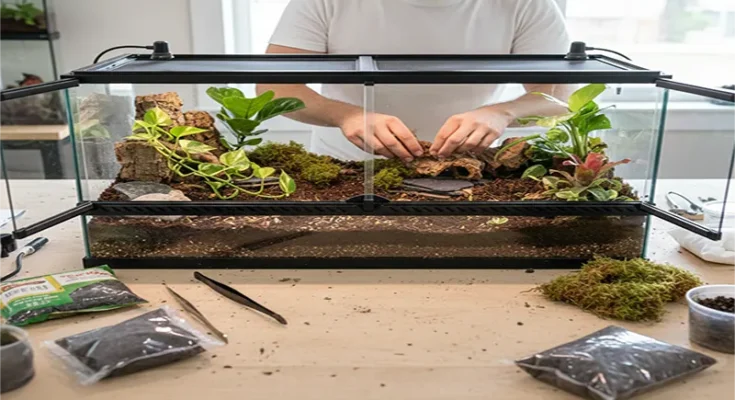
How to build a bioactive terrarium for crested geckos

How to build a bioactive terrarium for crested geckos

Why Go Bioactive?

The primary advantage of a bioactive system is the natural nitrogen cycle. In a traditional setup, you are the janitor; in a bioactive setup, the “Clean-Up Crew” (CUC) handles the heavy lifting. This leads to:

  • Stable Humidity: Real plants and organic soil hold moisture far better than glass and plastic.
  • Natural Enrichment: Geckos can hunt microfauna, climb real wood, and hide among living leaves.
  • Aesthetic Appeal: It transforms a pet enclosure into a stunning piece of living home decor.

Essential Components Breakdown

To build a functional ecosystem, you must layer the environment correctly. Think of it as building a house: if the foundation is wrong, the rest will eventually collapse.

1. The Enclosure

Crested geckos are arboreal. You need a vertical enclosure. The minimum recommended size for an adult is 18x18x24 inches, though larger is always better. Front-opening glass terrariums are ideal as they …

How to build a bioactive terrarium for crested geckos Read More