
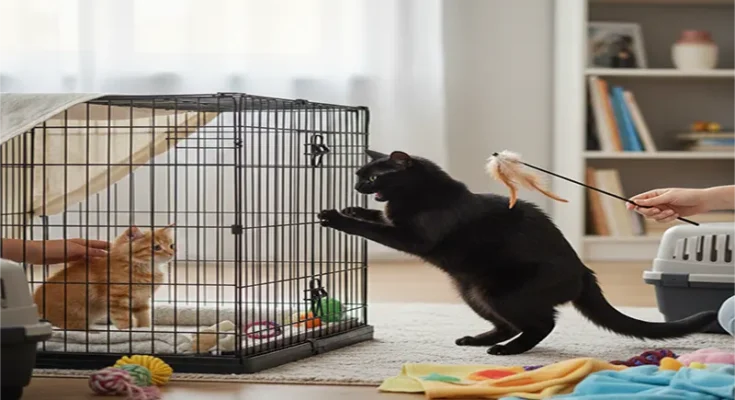
How to introduce a new kitten to an aggressive resident cat

How to introduce a new kitten to an aggressive resident cat

Preparation and the “Safe Room”

The biggest mistake owners make is the “sink or swim” method—simply placing the kitten on the floor and hoping the cats “work it out.” This often leads to psychological trauma for the kitten and a permanent state of hyper-vigilance for the resident cat.

The process begins with total physical separation. You must prepare a “Safe Room” for the kitten (usually a guest bedroom or bathroom) equipped with its own litter box, food, and water. This room acts as a buffer zone.

The first week is about the Scent Swap. In the feline world, identity is olfactory. Before they ever see each other, they must become “scent-friends.”

  • The Sock Technique: Rub a clean sock on the kitten’s cheeks (where their pheromone glands are) and place it near the resident cat’s food bowl.
  • The Bedding Trade: Swap their blankets. If the resident cat eats comfortably
How to introduce a new kitten to an aggressive resident cat Read More
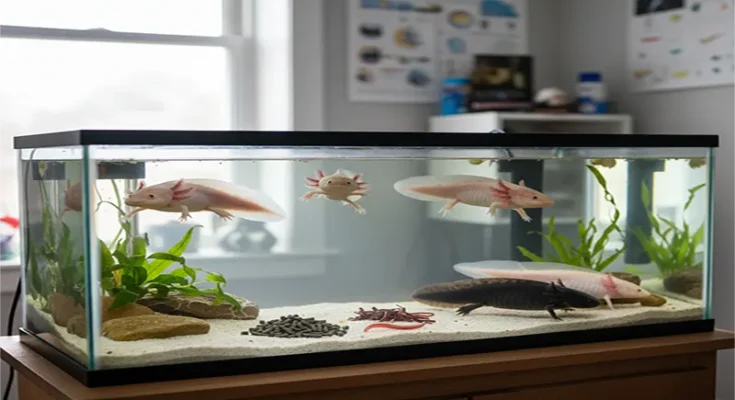
Dietary Requirements for Captive-Bred Axolotls

Dietary Requirements for Captive-Bred Axolotls

The Carnivorous Vacuum: Understanding Morphology

To feed an axolotl correctly, you must first understand how they eat. Axolotls are obligate carnivores, meaning their bodies are biologically designed to process animal protein and very little else. Unlike many other amphibians, axolotls have vestigial teeth—tiny, cone-like structures that are not meant for chewing or tearing meat. Instead, these teeth are used merely to grip prey.

Their primary method of ingestion is known as buccal force feeding, or “suction feeding.” When an axolotl senses movement (primarily through lateral line systems and smell), it snaps its mouth open suddenly. This creates a powerful vacuum that pulls the prey, along with a significant amount of water, into the oral cavity. Because they swallow their food whole, the size and texture of what you provide are critical to preventing choking or internal blockages.

The Gold Standard: Earthworms and Nightcrawlers

If there is a “superfood” …

Dietary Requirements for Captive-Bred Axolotls Read More
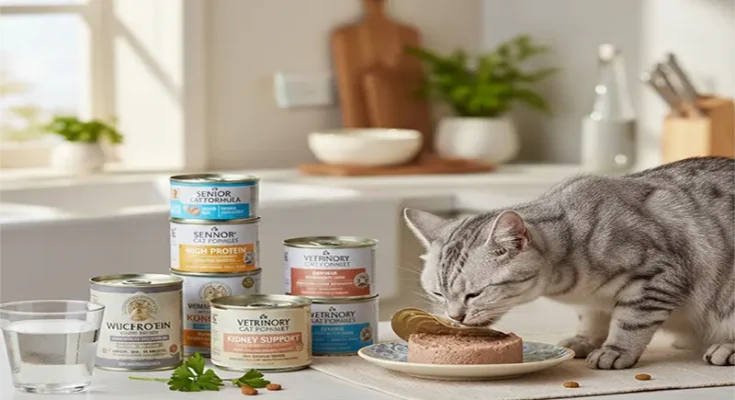
Best High-Protein Wet Food for Senior Cats with Kidney Issues

Best High-Protein Wet Food for Senior Cats with Kidney Issues

The Senior Kidney Paradox: Protein vs. Phosphorus

For decades, the cornerstone of managing feline Chronic Kidney Disease (CKD) was the restriction of dietary protein. The logic was that protein metabolism creates nitrogenous waste (measured as BUN in bloodwork), which the kidneys must filter. By lowering protein, we lowered the “workload.”

However, we have encountered a paradox. Senior cats are prone to sarcopenia—the age-related loss of skeletal muscle mass. When we put a senior cat on a severely protein-restricted diet, their body begins to catabolize its own muscle to meet its amino acid requirements. This leads to weakness, a compromised immune system, and a diminished quality of life.

Modern veterinary nutrition now focuses on the “Phosphorus vs. Protein” debate. Research indicates that phosphorus is the primary driver of kidney disease progression. High phosphorus levels (hyperphosphatemia) cause further damage to the nephrons. The goal for a senior cat in early-to-mid-stage CKD …

Best High-Protein Wet Food for Senior Cats with Kidney Issues Read More
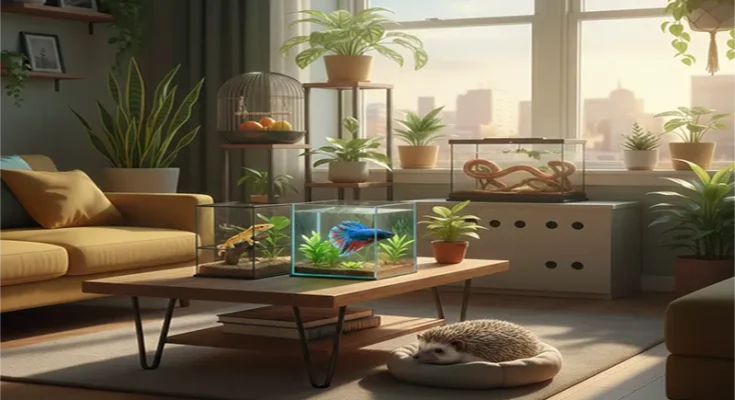
Best Low-Maintenance Exotic Pets for Small Apartments

Best Low-Maintenance Exotic Pets for Small Apartments

In the heart of bustling cities, where square footage is a luxury and busy schedules are the norm, the desire for a unique companion remains strong. While the idea of a large, playful dog or a curious cat might be appealing, the reality of apartment living often dictates a different path. This is where the charm of exotic, low-maintenance pets shines. These fascinating creatures offer all the joy of pet ownership without demanding extensive space, constant attention, or generating disruptive noise, making them ideal for urban dwellers, young professionals, and anyone living in a smaller apartment. A ‘low-maintenance’ pet in this context generally means one with minimal space requirements, a manageable feeding schedule, and often a quiet disposition, seamlessly integrating into a compact living environment.

Top Pet Recommendations for Apartment Dwellers

Let’s explore some of the best exotic options that thrive in smaller spaces and require less intensive daily care.…

Best Low-Maintenance Exotic Pets for Small Apartments Read More