
The Legal Landscape: CCR Title 14, Section 671
California’s approach to exotic animals is governed by the California Code of Regulations (CCR), Title 14, Section 671. This section classifies the fennec fox as a “Restricted Species.” Unlike states that allow these foxes with a simple hobbyist permit, California’s Department of Fish and Wildlife (CDFW) operates under a prohibitive framework.
The CDFW restricts species based on four critical pillars:
- Public Safety: Protecting citizens from unpredictable wild behavior.
- Environmental Protection: Preventing non-native species from escaping and outcompeting California’s native flora and fauna.
- Disease Control: Mitigating the risk of zoonotic diseases.
- Animal Welfare: Ensuring that specialized animals are not kept in substandard domestic conditions.
Because fennec foxes are non-native canids that could potentially establish feral populations in California’s desert regions, they are strictly regulated to prevent environmental “detriment.”
Who CAN Get a Permit? (The Exceptions)
While you cannot get a permit to keep a fennec fox in your living room, the CDFW does issue Restricted Species Permits for specific, non-pet purposes. These are typically granted only to organizations or highly qualified professionals.
- Exhibiting Permits: Issued to zoos, circuses, or educational programs that use the animal for public “instructional” purposes.
- Research Permits: Granted to accredited universities or scientific institutions for public health or biological studies.
- Shelter Permits: Issued to legitimate non-profit rescues that provide a “forever home” for confiscated or displaced exotic wildlife. These facilities are prohibited from breeding or selling the animals.
- Broker/Dealer Permits: For those in the business of transporting or selling restricted species between other legally permitted facilities.
The Rigorous Application Process
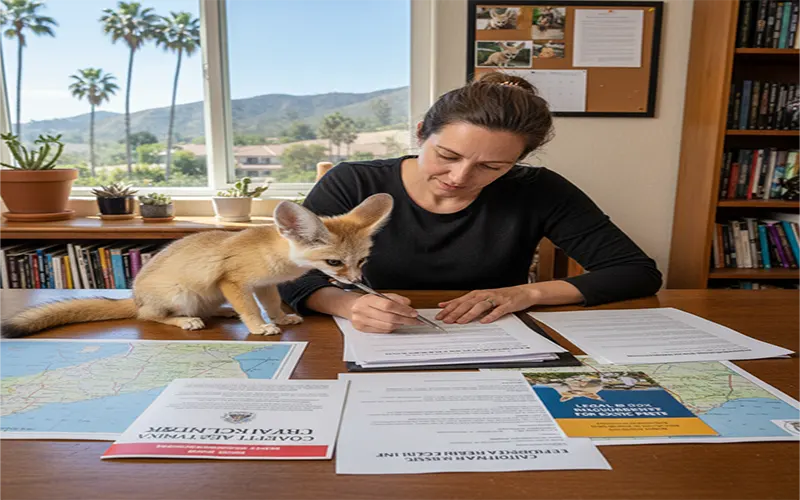
Obtaining a permit for a restricted species is a grueling administrative climb. It is designed to ensure that only those with professional-grade knowledge can handle these animals.
- Resume of Experience: An applicant must provide a detailed resume proving at least one year (minimum 2,000 hours) of full-time, hands-on experience working with the taxonomic family in question (in this case, Canidae).
- Letters of Recommendation: You must submit at least two letters from individuals who currently hold a valid Restricted Species Permit or are recognized experts (veterinarians, zoo curators) who can vouch for your competency.
- Emergency Action Plan: Every permit holder must have a written plan detailing how they will handle escapes, natural disasters, or animal attacks.
Facility and Caging Standards
If you pass the background and experience checks, your facility must then pass a physical inspection. CCR Title 14, Section 671.3 outlines the minimum caging standards. For a fennec fox, this includes:
- Double-Door Entry: To prevent “dash” escapes.
- Substrate Requirements: Proper flooring to allow for natural digging without escaping via tunnels.
- Ambient Temperature Control: Facilities must be able to mimic the arid, warm climate the fox requires for health.
Permit Fees and Inspections (2026 Rates)
Permit costs are non-refundable and must be paid annually. The following table reflects the current fee structure as of January 2026.
| Fee Type | 2026 Rate | Frequency |
| New Application Fee | $151.00 | One-time |
| Annual Renewal Fee | $78.25 | Yearly |
| Inspection Fee (1-5 Enclosures) | $312.00 | Yearly |
| Animal Care (Welfare) Fee | $77.50 | Yearly |
Note: Total startup cost for a new permit holder with a single enclosure typically exceeds $540.00 before the cost of the animal or habitat construction.
Consequences of Illegal Ownership
Social media “influencers” occasionally post videos of fennec foxes in California homes, leading many to believe the law is unenforced. This is a dangerous misconception. Illegal possession of a restricted species is a misdemeanor.
If discovered, the consequences are severe:
- Criminal Charges: Fines typically range from $500 to $10,000, plus potential jail time.
- Seizure: The CDFW will immediately confiscate the animal.
- Euthanasia Risk: Because many rescues are at capacity, seized exotic animals that cannot be placed in a permitted facility are often humanely euthanized. Owning an illegal fennec fox doesn’t just put you at risk—it puts the animal’s life at risk.
Alternatives for California Residents
If you love the “look” of an exotic canid but want to stay within the law, consider these legal California alternatives:
- Domestic Hybrids: While F1 wolf-hybrids are restricted, some domestic cat hybrids (like the Savannah cat) are legal if they meet specific generation requirements.
- Chinchillas: For those who want a desert-dwelling mammal with large ears and soft fur, chinchillas are fully legal and thrive in apartment settings.
- Legal Reptiles: If your interest is in “desert aesthetics,” many non-venomous monitor lizards and geckos are legal and provide a similar “exotic” hobbyist experience.
California’s restrictive laws regarding fennec foxes are not meant to be a killjoy for pet lovers; they are designed to protect the state’s massive agricultural industry and its delicate native ecosystems. While these foxes are undeniably charming, they remain wild animals with complex needs that are rarely met in a domestic kitchen. If you truly care for these animals, the best way to support them in California is to visit an accredited zoo or volunteer at a permitted wildlife shelter.