

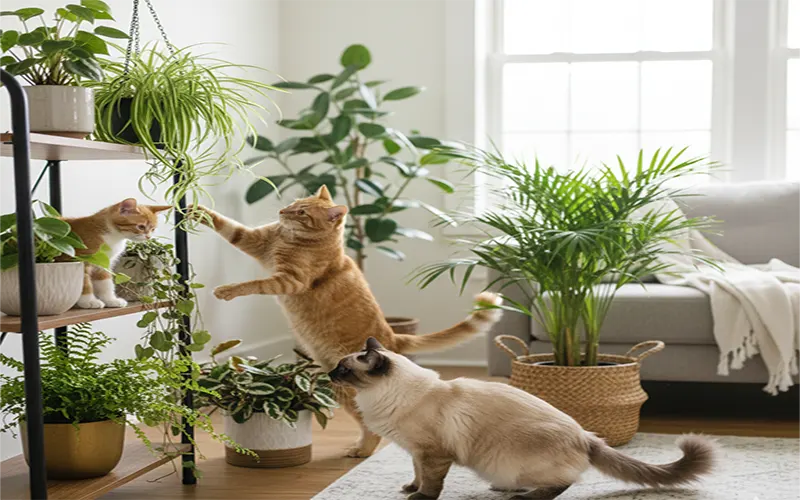
The Biology of the Nibble: Why Cats Chew Plants
Why do cats, obligate carnivores, gravitate towards plants? It’s often a mix of instinct and environment:
- Dietary Fiber: Even though meat is their primary food, a small amount of roughage can aid digestion and help pass hairballs.
- Boredom or Stress: Chewing provides mental stimulation and can be a self-soothing behavior.
- Texture Seeking: Some cats simply enjoy the sensation of tearing and munching on leaves.
- Instinctual Cleansing: In the wild, eating grass can induce vomiting, helping cats purge indigestible parts of their prey or hairballs.
It is crucial to understand the distinction between “Toxic” and “Irritant.” A truly toxic plant (like lilies) can cause systemic organ failure or even death. An irritant (like a Pothos) typically causes localized irritation in the mouth, leading to drooling, pawing at the mouth, or mild stomach upset. While bothersome, it is rarely life-threatening. Our focus here is on plants that are neither.
The “Ultimate Safe” List: Plants for Pro-Chewers
These plants are not only deemed non-toxic by veterinary organizations but also tend to be appealing to cats without causing harm.
1. Spider Plants (Chlorophytum comosum)
Spider plants are arguably the most popular and safest choice for cat owners. Their long, arching, grass-like leaves are irresistible to many cats. Some theories even suggest they have a mild, harmless hallucinogenic effect on felines, similar to catnip, making them even more enticing. They are incredibly easy to care for, tolerant of varied light conditions, and produce “spiderettes” that can be easily propagated.
2. Areca Palm (Dypsis lutescens) or Ponytail Palm (Beaucarnea recurvata)
Both of these palms offer a fantastic “stringy” texture that cats adore. The Areca Palm provides lush, feathery fronds, while the Ponytail Palm (which is actually a succulent) has a unique bulbous base and long, arching leaves. Both are robust, non-toxic, and provide a vertical element that adds to the indoor jungle feel. Ensure you get true Areca or Ponytail palms, as other palm varieties can be toxic.
3. Calathea (Prayer Plants – Maranta leuconeura and others)
Known for their stunning, intricately patterned leaves that fold up at night, Calatheas (and their close relatives, Marantas) are completely non-toxic to cats. They love high humidity, making them excellent bathroom plants, and their broad leaves provide a different chewing texture for curious cats without any ill effects.
4. Boston Ferns (Nephrolepis exaltata)
These classic, voluminous ferns are a fantastic choice for their air-purifying qualities and their completely non-toxic nature. Their delicate, frilly fronds offer a satisfying “crunch” for cats who enjoy a different kind of texture. Boston ferns thrive in bright, indirect light and consistent moisture, providing a lush, safe green space.
5. Cat Grass (Dactylis glomerata) & Catnip (Nepeta cataria)
These aren’t just safe; they’re designed for cats! Providing a dedicated pot of fresh cat grass (often a mix of oat, wheat, or barley grasses) is the ultimate “redirected chewing” strategy. It gives your cat their own special plant to nibble on, often saving your more ornamental greenery. Catnip is also safe and offers mental stimulation; grow it yourself for maximum potency.
Toxicity Red Flags: Common Hidden Dangers to Avoid
Even seasoned plant parents can be caught unaware. Here is a table of common houseplants that pose significant risks to cats:
| Plant Name (Latin) | Common Name(s) | Primary Symptom / Danger |
| Lilium species | Lily, Easter Lily | Acute Kidney Failure (even small ingestions are fatal). |
| Tulipa / Hyacinthus | Tulip / Hyacinth | Vomiting, diarrhea, excessive drooling, cardiac arrhythmias (especially bulbs). |
| Zamioculcas zamiifolia | ZZ Plant | Oral irritation, intense burning, difficulty swallowing. |
| Spathiphyllum | Peace Lily | Oral irritation, drooling, vomiting (calcium oxalates). |
| Dieffenbachia | Dumb Cane | Oral irritation, intense burning, swelling of mouth/throat. |
| Aloe vera | Aloe | Vomiting, diarrhea, lethargy (saponins). |
| Pothos / Philodendron | Devil’s Ivy, Heartleaf Philodendron | Oral irritation, drooling, vomiting (calcium oxalates). |
The “Chew-Proofing” Strategy
While safe plants are a great start, a persistent nibbler might still eye your forbidden plants. Here’s how to deter them:
- Elevate: Utilize hanging planters, tall plant stands, or wall-mounted shelves to keep plants out of paw’s reach.
- Bitter Apple Spray: A taste deterrent like Grannick’s Bitter Apple can be sprayed directly onto leaves. Cats find the taste repulsive but it’s harmless. Reapply after misting or watering.
- Physical Barriers: Arrange pebbles or pinecones on the soil surface to deter digging or playing in the pot.
- “Sacrificial” Plants: As mentioned, a dedicated pot of cat grass can redirect chewing away from other plants.
- Enrichment: Ensure your cat has plenty of toys, scratching posts, and interactive play to combat boredom. A bored cat is a destructive cat.
What to Do in an Emergency
If you suspect your cat has ingested a toxic plant, act quickly:
- Identify the Plant: Take a photo or collect a sample of the plant. This is crucial for veterinary toxicology.
- Contact a Professional: Call your veterinarian immediately or the ASPCA Animal Poison Control Center (888-426-4435). There is a fee for the latter, but their expertise is invaluable.
- Observe Symptoms: Look for signs like excessive drooling, vomiting, diarrhea, lethargy, difficulty breathing, pawing at the mouth, or unusual behavior.
- Do NOT Induce Vomiting: Unless specifically instructed by a vet, do not try to make your cat vomit, as this can sometimes cause more harm.
Creating a lush, safe indoor environment for your cat, even one that loves to chew, is entirely achievable. By choosing truly non-toxic and appealing plants, strategic placement, and having a plan for deterrence and emergencies, you can enjoy the beauty of an indoor jungle without compromising your feline friend’s health. Your cats will appreciate the enrichment, and you’ll appreciate the peace of mind.