
The Senior Kidney Paradox: Protein vs. Phosphorus
For decades, the cornerstone of managing feline Chronic Kidney Disease (CKD) was the restriction of dietary protein. The logic was that protein metabolism creates nitrogenous waste (measured as BUN in bloodwork), which the kidneys must filter. By lowering protein, we lowered the “workload.”
However, we have encountered a paradox. Senior cats are prone to sarcopenia—the age-related loss of skeletal muscle mass. When we put a senior cat on a severely protein-restricted diet, their body begins to catabolize its own muscle to meet its amino acid requirements. This leads to weakness, a compromised immune system, and a diminished quality of life.
Modern veterinary nutrition now focuses on the “Phosphorus vs. Protein” debate. Research indicates that phosphorus is the primary driver of kidney disease progression. High phosphorus levels (hyperphosphatemia) cause further damage to the nephrons. The goal for a senior cat in early-to-mid-stage CKD is to provide high-quality, highly digestible protein while strictly restricting phosphorus.
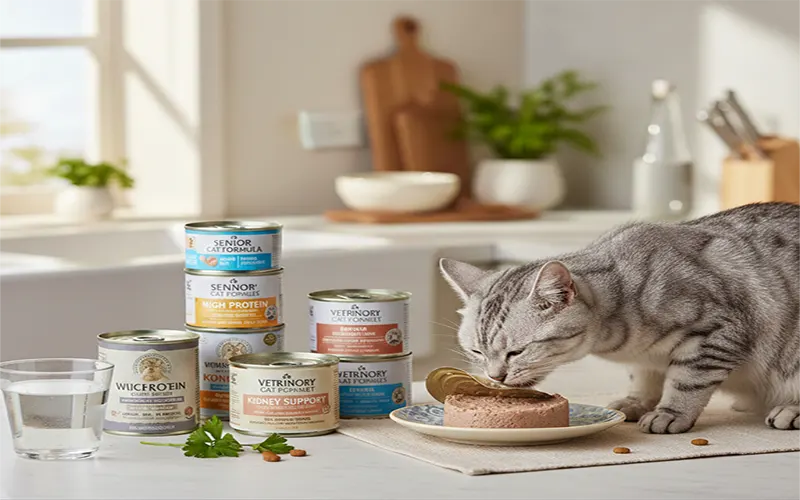
Furthermore, hydration is non-negotiable. Because the kidneys can no longer concentrate urine, CKD cats are in a constant state of dehydration. Wet food is the most effective way to provide the “water bowl in a can” they desperately need.
Top Product Recommendations
Navigating the pet food aisle with a CKD cat requires looking past the marketing and into the Dry Matter Basis (DMB) of the ingredients. Here are the top picks for cats who need to maintain muscle but protect their kidneys.
1. Prescription “Early Support” Diets
Standard renal diets (Stage 3 or 4) are often very low in protein to manage severe uremia. However, for cats in IRIS Stage 1 or 2, an “Early Support” diet is often superior.
- Royal Canin Early Renal: This formula is designed specifically for the transition period. It contains higher protein levels than the “Select” or “Support” varieties but maintains a restricted phosphorus level. It also includes an antioxidant complex and long-chain omega-3 fatty acids (EPA and DHA) to support kidney filtration.
- Purina Pro Plan Veterinary Diets NF Early Care: This diet focuses on high palatability (essential for seniors with fading appetites) and contains moderate amounts of high-quality protein to maintain lean body mass.
2. The Low-Phosphorus Non-Prescription Options
Sometimes, a cat flatly refuses prescription food. In these cases, we look for “near-renal” commercial foods that use specific protein sources like egg whites.
- Weruva Wx Phos Focused: This is a game-changer for senior cats. Weruva uses egg whites as the primary protein source. Egg whites are the “gold standard” for digestibility and are naturally extremely low in phosphorus. This allows the protein content to remain high (to support muscles) while keeping phosphorus levels comparable to prescription renal diets.
3. Human-Grade and Fresh Options
Fresh food often has higher bioavailability, meaning the cat’s body can use more of the protein with less “waste” for the kidneys to process.
- Smalls (Ground Bird): While not a clinical renal diet, Smalls uses human-grade muscle meat and heart. For a cat in very early stage CKD who refuses all other options, the high moisture content (approx. 75-80%) and lack of fillers make it a cleaner option than standard grocery store kibble.
- JustFoodForCats (Veterinary Support): They offer a specific “Renal Support” fresh-frozen diet. It is lightly cooked, which preserves amino acids and moisture better than the high-heat canning process.
Nutritional Comparison Table
Note: Values are estimated on a Dry Matter Basis (DMB) to allow for an “apples-to-apples” comparison between brands.
| Product | Primary Protein Source | Phosphorus (DMB) | Primary Benefit |
| Royal Canin Early Renal | Pork/Chicken | ~0.50% – 0.60% | Balanced for IRIS Stage 1 & 2; contains EPA/DHA. |
| Purina NF Early Care | Meat by-products | ~0.45% – 0.55% | Highly palatable; specifically designed for early CKD. |
| Weruva Wx Phos Focused | Chicken & Egg Whites | ~0.40% – 0.50% | High protein/Low phos without a prescription. |
| Smalls Ground Bird | Chicken/Turkey | ~0.80% – 0.90% | High moisture & bioavailability for picky eaters. |
| Typical Grocery Brand | Mixed Scraps | ~1.2% – 1.8% | NOT RECOMMENDED for kidney issues. |
Palatability Hacks for Picky Seniors
Kidney disease often causes nausea due to the buildup of toxins in the blood. Even the best food won’t help if the cat won’t eat it.
- The 101°F Rule: A cat’s natural prey is roughly $101^\circ\text{F}$. Warming wet food in the microwave for 5-10 seconds (ensure no hot spots!) releases the aromas, which is vital for senior cats whose sense of smell may be fading.
- Whisker Fatigue: Use wide, shallow glass or ceramic bowls. Many seniors have sensitive whiskers, and the “burn” of whiskers hitting the side of a deep bowl can discourage them from finishing their meal.
- Low-Sodium Toppers: If your cat is flagging, add a teaspoon of juice from a can of tuna (packed in water, NO salt added) or a sprinkle of “FortiFlora” to entice them.
Managing a senior cat with kidney issues is a balancing act. While phosphorus restriction is the key to slowing the disease, we must not starve the cat of the protein they need to stay strong. The “best” food for your cat is ultimately the one they are willing to eat. Regular bloodwork and IRIS staging (International Renal Interest Society) are essential to determine exactly how much protein restriction your cat needs. If you notice a drop in your cat’s Muscle Condition Score (MCS)—such as a prominent spine or sunken hips—it may be time to discuss increasing protein quality with your veterinarian.