The Foundation: Sugar Glider Social Structure
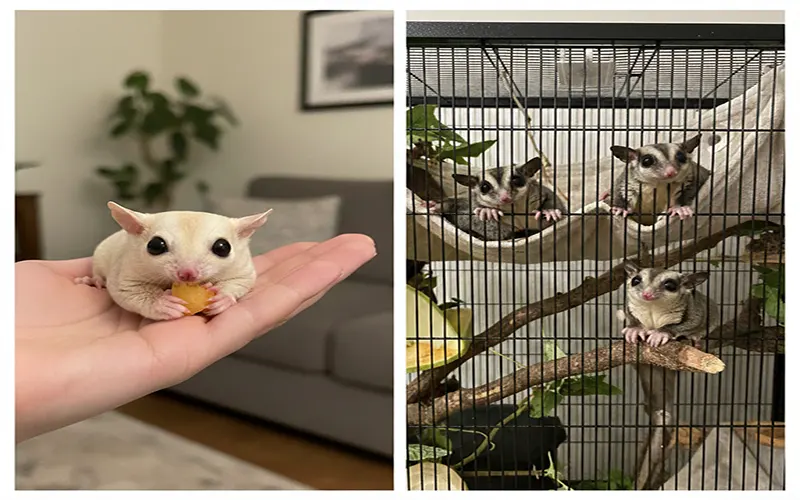
In the wild, sugar gliders are intensely social, living in communal groups of 6 to 10 individuals. Their lives revolve around a sophisticated language of scents, vocalizations, and grooming rituals. Central to their development is the concept of Imprinting.
Imprinting occurs during the “Pouch Out” (PO) phase and the subsequent weeks of weaning. During this window, a joey learns what it is: is it a glider that communicates with other gliders, or is it a creature that looks to humans for every emotional need? A well-adjusted temperament requires a glider to understand its own species’ social cues while simultaneously viewing humans as safe, non-threatening partners.
Hand-Raised Gliders (HPB – Human-Raised Pouch Babies)
A hand-raised glider is typically removed from the parents early, often due to parental rejection or a breeder’s attempt to create a “super-bonded” pet. These joeys are fed via syringe and kept in “bonding pouches” on the human body for the majority of the day.
The Pros
The primary appeal of the HPB is an almost instantaneous trust in humans. These gliders often lack the defensive Crabbing (a loud, rasping vocalization) typical of nervous gliders. They are usually very docile, less likely to nip, and may seek out human skin for warmth and security immediately upon arriving at a new home.
The Cons and Risks
The risks of hand-raising are significant and often overlooked.
- Human Imprinting: If a joey is raised in isolation from other gliders, it may fail to learn “how to be a glider.” This can lead to extreme aggression or terror when later introduced to a cage-mate.
- Over-Dependence: An HPB may view the human as its only source of comfort. When the owner goes to work or sleep, the glider may experience severe separation anxiety, leading to Lonely Glider Syndrome.
- Behavioral Issues: Without the “discipline” of a mother or father glider (who nip joeys to teach boundaries), hand-raised babies can actually grow up to be quite “bossy” or nippy adults because they never learned bite inhibition from their own kind.
Colony-Raised Gliders (CRB – Colony-Raised Babies)
A colony-raised joey stays with its parents and siblings throughout the entire weaning process. Their primary social bonds are with their own species.
The Pros
Psychologically, CRBs are the most stable. They learn the “glider language”—how to groom, how to play-fight without causing injury, and how to sleep in a communal huddle. They are much less prone to self-mutilation and “lonely glider syndrome” because they are emotionally self-sufficient. They integrate into new colonies with significantly less stress than hand-raised individuals.
The Cons
Initially, a CRB may be more reserved. If the breeder did not handle the colony frequently, the joey might view humans as large predators. They are more likely to “crab” or lunge when a hand enters the cage for the first few weeks. Bonding with a colony-raised glider is a slower process that requires more patience and “pouch time.”
Temperament Comparison Table
| Feature | Hand-Raised (HPB) | Colony-Raised (CRB) |
| Initial Human Trust | High / Immediate | Low to Moderate |
| Glider Social Skills | Poor (Risk of Imprinting) | Excellent / Natural |
| Independence Level | Low (Clingy/Dependent) | High (Well-Adjusted) |
| Risk of Behavioral Issues | High (Anxiety/Aggression) | Low (Given proper bonding) |
| Ease of Integration | Difficult | Easy |
The Hybrid Approach: The Best of Both Worlds
The most successful breeders today utilize a hybrid approach. This involves leaving the joeys with their parents (to ensure healthy social imprinting) while implementing intensive “Pouch Out” handling.
By handling the joeys for 30–60 minutes several times a day while they are still living with the colony, the breeder creates a “socially bilingual” glider. This joey learns that humans are part of the extended colony, yet they still receive the warmth, grooming, and behavioral “rules” provided by their biological parents. This results in a glider that is both friendly to humans and psychologically sound.
Recognizing Problematic Temperaments
Regardless of how they were raised, owners must watch for signs of psychological distress.
- Self-Mutilation: Often a sign of extreme stress or “Lonely Glider Syndrome,” usually seen in gliders lacking social interaction.
- Fear-Aggression: If a glider is lunging and biting without a defensive “crab,” they may be over-stimulated or feeling territorially insecure.
- Refusing Socialization: A hand-raised glider that hides or attacks when a second glider is introduced is likely “human-imprinted” and requires professional behavioral intervention.
While the idea of a hand-raised “pocket pet” is alluring, it often comes at the cost of the animal’s long-term mental health. A sugar glider’s temperament is best served when they are allowed to be gliders first and companions second.
When choosing a glider, prioritize those raised in a colony environment but handled frequently by the breeder. Patience in the bonding process is a small price to pay for a well-adjusted, confident companion that can live a full, socially enriched life of up to 15 years.