
The Pet Care Economy in 2026
The “humanization of pets” trend that began a decade ago has reached its peak in 2026. Cat owners are now more willing than ever to invest in high-quality care, but inflation has pushed baseline prices upward. While app-based “gig” platforms still exist, they have largely shifted toward specialized, vetted services to compete with boutique local businesses. These local firms offer higher levels of insurance, staff training in feline behavior, and sophisticated tech integration, making professional cat care a premium service.
In-Home Cat Sitting: The “Luxury of Familiarity”
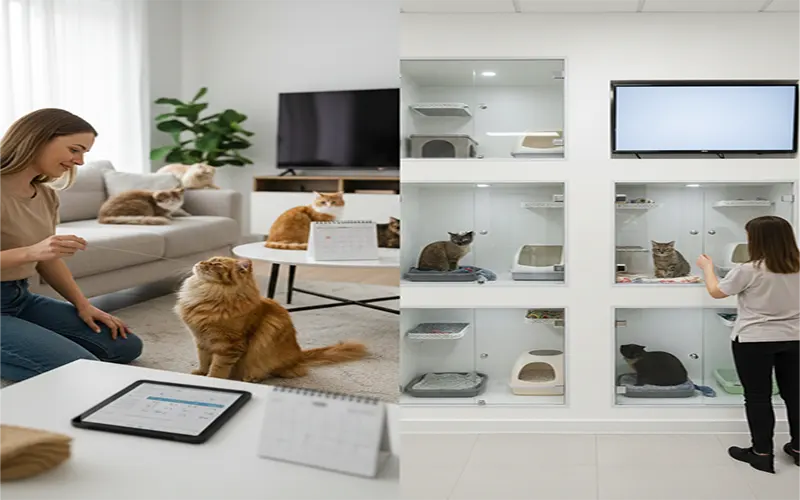
For the majority of cats—territorial creatures by nature—the primary benefit of in-home sitting is the lack of environmental stress. In 2026, this is considered the “gold standard” for behaviorally sensitive or elderly cats.
Pricing Structure
- Standard 30-Minute Visit: Expect to pay between $32 and $48 per visit. This typically covers feeding, litter scooping, and brief social interaction.
- The “Premium Hour” (60 Minutes): Priced between $55 and $75, this is designed for cats requiring intensive play or complex medical administration.
- Overnight House Sitting: This remains the most expensive tier, ranging from $120 to $185 per night. This includes the sitter living in your home, providing 24/7 security for both the property and the pet.
The Hidden Value
Beyond feline comfort, sitters provide “home watch” services that are often overlooked. In 2026, most professional sitters include mail retrieval, plant watering, and rotating lights to simulate occupancy. Furthermore, the risk of “kennel stress”—which can suppress a cat’s immune system and lead to respiratory infections—is virtually zero.
Technology Integration
Modern sitters in 2026 leverage smart-home technology. It is now standard for a sitter to use AI-integrated cameras to monitor the cat between visits, providing owners with “activity heat maps” and automated video highlights of the cat eating or playing. Smart-lock access has also removed the “key handoff” logistical headache.
Professional Cat Boarding: The “Clinical & Social” Choice
Boarding has evolved from “cages in a vet’s office” to specialized feline retreats. This option is often preferred for cats requiring 24-hour medical monitoring or for owners who live in areas where home security makes inviting a sitter difficult.
Tiers of Care
- Standard Kennels: These are clean, functional “condos” with multi-level shelving. Price: $35 to $55 per night.
- Luxury Feline Hotels: These suites often feature floor-to-ceiling windows, private “catio” access, and aromatherapy systems. Price: $85 to $130 per night.
Medical Advantages
For cats with Chronic Kidney Disease (CKD) or Diabetes, boarding at a facility attached to a veterinary clinic is a significant safety net. The cost of “Medical Boarding” typically incurs an additional $15 to $25 daily surcharge for insulin injections or subcutaneous fluid administration, but it ensures that a doctor is only steps away if a crisis occurs.
2026 Cost Comparison Table
| Service Type | Avg. Daily Rate (2026) | Best For | Primary Risk |
| Sitting (Single Visit) | $35 – $45 | Independent, healthy cats. | Loneliness / Hidden illness. |
| Sitting (Overnight) | $120 – $180 | Multi-cat homes, anxious pets. | Higher cost / Privacy loss. |
| Standard Boarding | $40 – $55 | Single cats, budget travel. | Stress-induced illness. |
| Luxury Boarding | $90 – $125 | Social cats, medical needs. | High “per-head” cost. |
The “Multi-Cat” Math: The Tipping Point
The financial “tipping point” is where in-home sitting becomes significantly more cost-effective than boarding. Most boarding facilities charge per cat, though they may offer a 10–15% discount for a shared suite. Conversely, cat sitters usually charge per visit, regardless of the number of cats (up to a reasonable limit, usually 3 or 4).
The 2026 Rule of Thumb: If you have three or more cats, boarding is almost always the more expensive choice. For example, boarding three cats in standard condos would cost roughly $120/night, whereas two professional home visits would cost approximately $80/day.
Safety, Insurance, and the “Gig” Trap
In 2026, the liability landscape has changed. “Gig economy” apps often provide limited insurance that may not cover property damage or specific medical emergencies. Professional boutique firms are Bonded and Insured, providing coverage for “care, custody, and control.”
Before hiring, always verify:
- Workman’s Comp: Ensures you aren’t liable if a sitter is injured on your property.
- Pet Pro Liability: Covers the cat if the sitter accidentally leaves a door open or misses a medication dose.
Matching the Method to the Cat
Ultimately, the choice depends on your cat’s “Personality Profile.”
- The Anxious Hider: These cats must stay home. The cost of a sitter is an investment in preventing a stress-related health crisis.
- The Social Adventurer: Some younger, highly social cats actually enjoy the “change of scenery” in a luxury hotel with window views of birds.
- The Senior with Medical Needs: If your cat requires twice-daily insulin or has a history of “crashing,” the clinical safety of a boarding facility outweighs the comfort of home.
As we look at the costs in 2026, pet care has become a significant travel expense. By calculating the “Multi-Cat Math” and weighing the medical risks against the comfort of familiarity, you can ensure that your cat’s “vacation” is as stress-free as your own.